
Tubi’s 2025 Surge. How Free Streaming Is Changing the Game
In 2025, Tubi, the free ad-supported streaming service owned by Fox Corporation, is not just growing; it’s reshaping the streaming landscape. Once considered a niche alternative to subscription video-on-demand (SVOD) platforms, Tubi has reached significant milestones that position it as a serious competitor for viewership and advertising investment, particularly among younger and cost-conscious audiences.
Historic Growth in Users and Engagement
In June 2025, Tubi announced that it had surpassed 100 million monthly active users, a major milestone for any streaming platform but especially notable for an ad-based service with no subscription fees. During May 2025 alone, the platform logged over 1 billion hours of total viewing time, a clear indicator of deep viewer engagement.
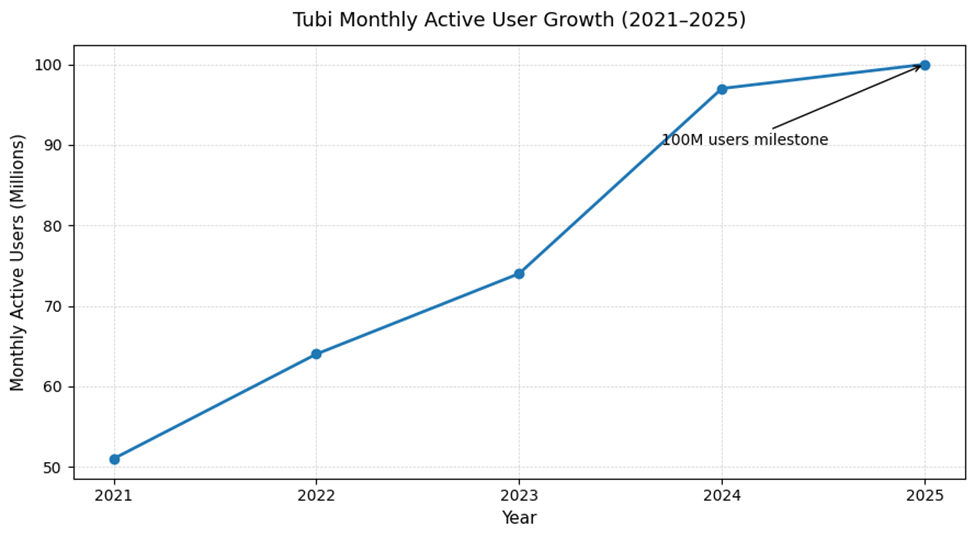
“In 2025, Tubi surpassed 100 million monthly active users, marking one of the fastest growth trajectories in the free ad-supported streaming segment.”
According to Nielsen’s The Gauge, Tubi accounted for 2.2% of total U.S. television viewing minutes in May 2025, the highest share in the service’s history. This share of total viewing time highlights not only sheer scale but also how free, ad-supported video on demand (AVOD) services are capturing attention previously dominated by cable and traditional TV.
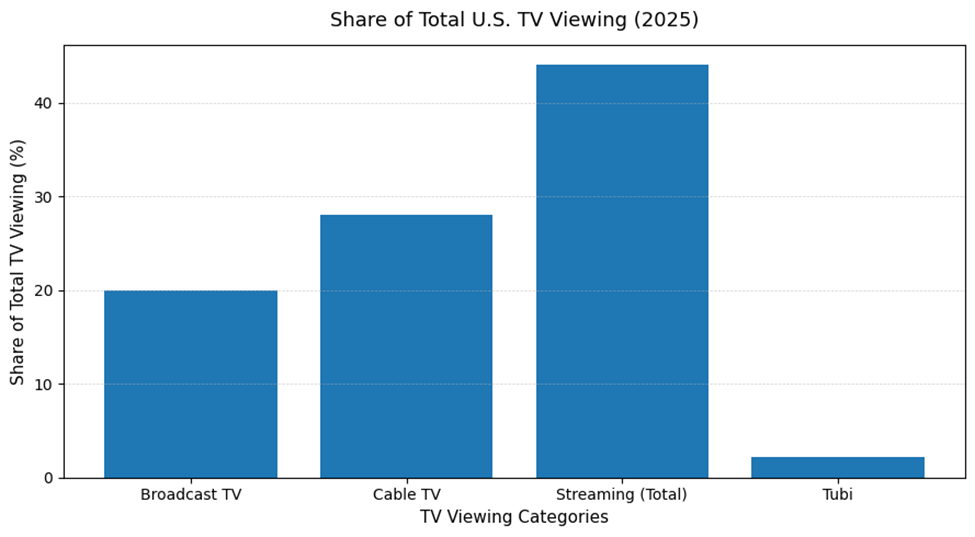
“In 2025, Tubi surpassed 100 million monthly active users, marking one of the fastest growth Streaming now leads total TV viewing, and Tubi’s measurable share shows that free, ad-supported platforms are becoming part of mainstream consumption, not just alternatives.rajectories in the free ad-supported streaming segment.”
A New Kind of Streaming Audience
Unlike subscription models that rely on paid memberships, Tubi’s growth has been fueled by accessibility and convenience. The platform’s free-to-watch model appeals to younger viewers, more than half of its audience falls into Gen Z and Millennial age groups, and these viewers often identify as “cord-cutters” or “cord-nevers,” meaning they have never subscribed to traditional pay-TV services. According to audience studies, 67% of Tubi’s users are in these categories, underscoring how free streaming appeals to shifting consumption habits.
…According to Cord Cutters News
Tubi’s expansive content library includes nearly hundreds of thousands of movies and TV episodes as well as around 400 original productions, which further helps it stand out among ad-supported competitors.
Why Advertisers Are Paying Attention
Tubi’s rapid rise is not only about viewership numbers; it’s also about advertiser value. With traditional TV viewership shrinking and cable audiences declining, brands are increasingly looking for ways to reach consumers where they are spending time, online and on streaming platforms. As streaming reaches historic heights across all platforms, Nielsen reports that for the first time streaming usage surpassed the combined share of broadcast and cable in total TV usage.
…According to Nielsen News Center
Because Tubi’s audience skews younger and is already accustomed to ad-supported models, advertisers see it as a powerful channel to reach engaged users without the friction of subscription requirements. This dynamic suggests that Tubi’s continued growth could influence advertising strategies across the wider industry.
Competing with Major Streaming Names
While subscription giants like Netflix, Disney+, and Amazon Prime Video still lead in overall attention and revenue, Tubi’s performance in 2025 demonstrates that free streaming is no longer at the fringe of the industry. In the broader category of free ad-supported television (FAST), Tubi stands alongside services like The Roku Channel and Pluto TV, collectively contributing millions of hours to total streaming viewership each month.
In fact, industry data shows that Roku’s free channel reached an even larger share of viewing time later in 2025, but Tubi’s growth remains significant given its free-only model and young audience base.
What This Means for the Future of Streaming
Tubi’s growth in 2025 points to a broader evolution in how audiences consume video content. The service’s success demonstrates that:
- Free, ad-supported streaming is no longer niche, it can generate massively engaged audiences.
- Younger viewers are driving change, valuing accessibility over subscriptions.
- Advertisers are reallocating budgets toward platforms that deliver real engagement and measurable attention.
- Traditional viewership models are weakening, with streaming surpassing legacy TV formats in overall audience time spent.
Tubi’s rapid growth in the U.S. raises an important question: why is a platform with this level of adoption still largely limited to one market? The answer lies not in demand, but in complexity. Tubi operates primarily in the United States due to licensing agreements, regional content rights, advertising infrastructure, and regulatory frameworks that differ significantly across regions. Unlike subscription platforms that rely on direct user payments, ad-supported streaming services depend heavily on local advertising ecosystems, audience measurement standards, and content distribution rights, all of which require country-specific partnerships.
Despite these limitations, Tubi’s current trajectory suggests significant international potential. The same economic pressures driving U.S. viewers toward free streaming, subscription fatigue, rising costs, and fragmented content libraries, are equally present in Europe and other global markets. In many regions, especially across Europe, audiences are already accustomed to free-to-air television models supported by advertising, making the transition to FAST (Free Ad-Supported Streaming Television) platforms a natural evolution rather than a disruptive shift.
From a strategic perspective, Tubi’s model is highly scalable. As advertising technology becomes more global and content licensing strategies evolve, platforms like Tubi could expand into Europe through localized versions, regional content partnerships, or hybrid models that combine global libraries with country-specific offerings. Netflix and YouTube demonstrated years ago that scale follows accessibility, once infrastructure, localization and rights are in place, adoption can happen quickly when friction is removed. Even if Tubi itself does not immediately expand beyond the U.S., its success sends a clear signal to the industry: free, ad-supported streaming is no longer experimental, it is the future of mass-market video consumption. This opens the door for similar platforms, regional FAST services, or broadcaster-backed streaming apps to emerge across Europe and beyond, applying the same principles of accessibility, simplicity and advertiser-funded content. In this sense, Tubi may be less important as a single global brand and more important as proof that the streaming market is entering a new phase, one where reach and usability matter more than subscriptions alone.
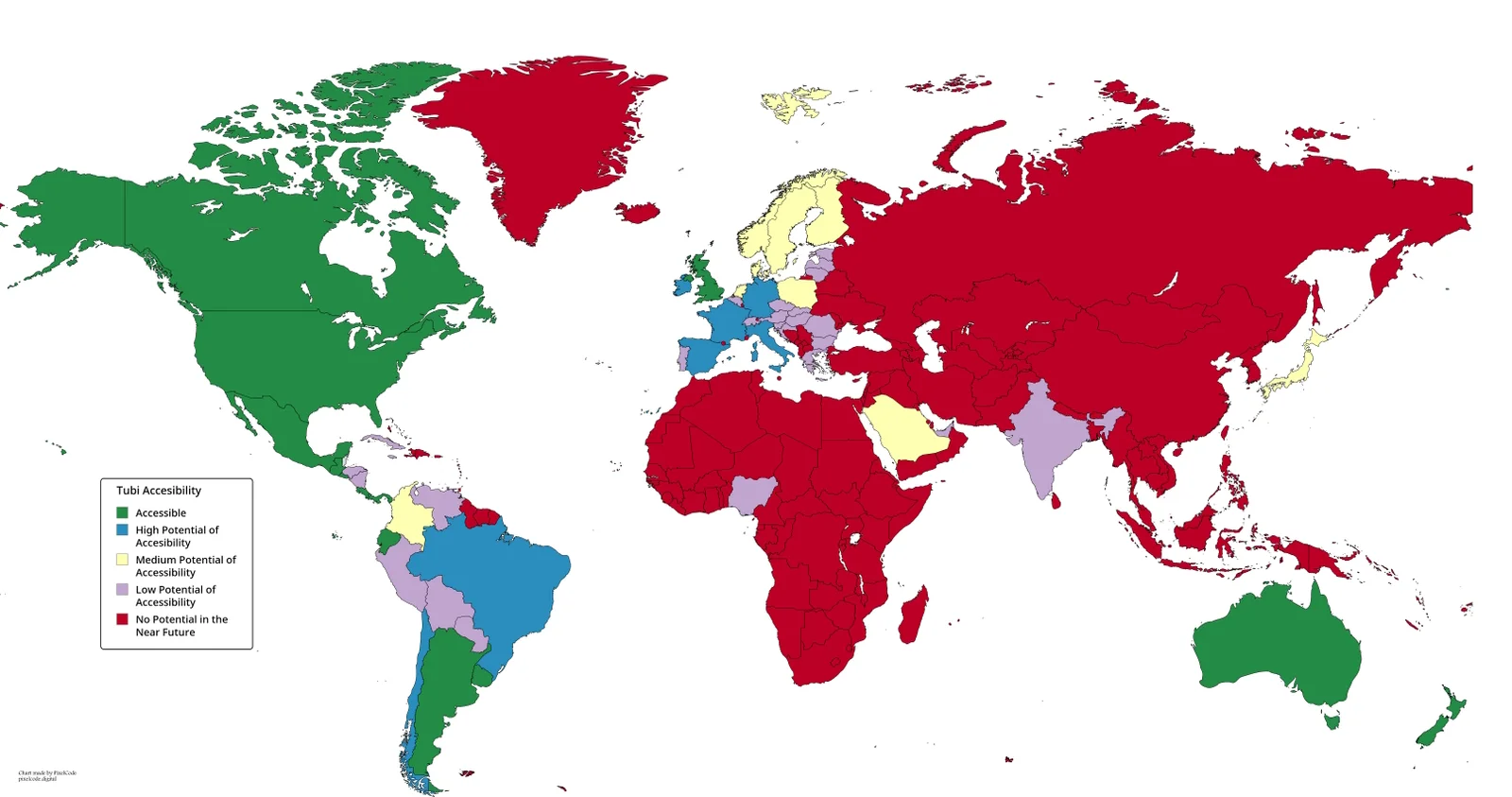
High Potential of Accessibility
Germany France Italy Spain Ireland Brazil ChileMedium Potential of Accessibility
Netherlands Sweden Norway Denmark Finland Poland Colombia Japan Saudi ArabiaLow Potential of Accessibility
Portugal Belgium Austria Czech Republic Hungary Romania Greece India Bulgaria Croatia Slovenia Peru South Africa NigeriaClassification is based on advertising market maturity, connected-TV penetration, content licensing complexity, and regulatory feasibility. Categories reflect short- to mid-term potential, not long-term demand.